Protect the basics
Reduce decisions around food, sleep, medication, transportation, paperwork, children, pets, and urgent responsibilities.
 Compassion NavigatorStart here
Loss of a Partner
Compassionate guidance for the practical, emotional, and relational changes that can follow the death of a partner.

Start here
The death of a partner can alter home, finances, parenting, intimacy, daily routines, decision-making, identity, and the future that was planned together. The relationship may have been close, complicated, distant, dependent, or all of those at different times. Grief is allowed to hold the whole truth.
The absence can be present in every hour—from waking and eating to paperwork, bedtime, and making decisions alone. There is no single correct response and no deadline for understanding what this loss means.
You are allowed to grieve the relationship you had, the relationship you needed, and the future you expected.
Practical care
Choose one useful thing and do it reliably. Care is easier to receive when it does not create another decision.
Reduce decisions around food, sleep, medication, transportation, paperwork, children, pets, and urgent responsibilities.
Notice the roles, routines, history, security, conflict, and imagined future that changed—not only the death itself.
Love, anger, regret, relief, numbness, gratitude, and longing can exist together without canceling one another.
Choose specific help that reduces work rather than requiring you to organize, host, or reassure other people.
Birthdays, holidays, familiar places, family events, and ordinary routines may carry unexpected weight.
A grief-informed counselor, support group, trusted friend, faith leader, or medical professional may help with different parts of the loss.
Words that help
Try saying
Leave unsaid
Care over time
Grief changes shape. The most memorable support is often the care that returns after everyone else assumes the hardest part is over.
First days
Help with updates, food, transportation, visitors, paperwork, pets, children, and urgent decisions.
After services
Loneliness and exhaustion may intensify when formal rituals and immediate support end.
The first year
Birthdays, holidays, seasons, and anniversaries can change the emotional weather.
Later years
Use the person’s name and welcome memories without demanding visible progress.
A gentle truth
Grief does not require idealizing the person or rewriting family history. It can include what was loving, what was painful, what changed, and what never had the chance to change.
If grief is accompanied by thoughts of self-harm, inability to stay safe, or a medical emergency, contact 988 in the United States or emergency services now.
Personalized support
Begin wherever you are. Choose the kind of support that feels right today.
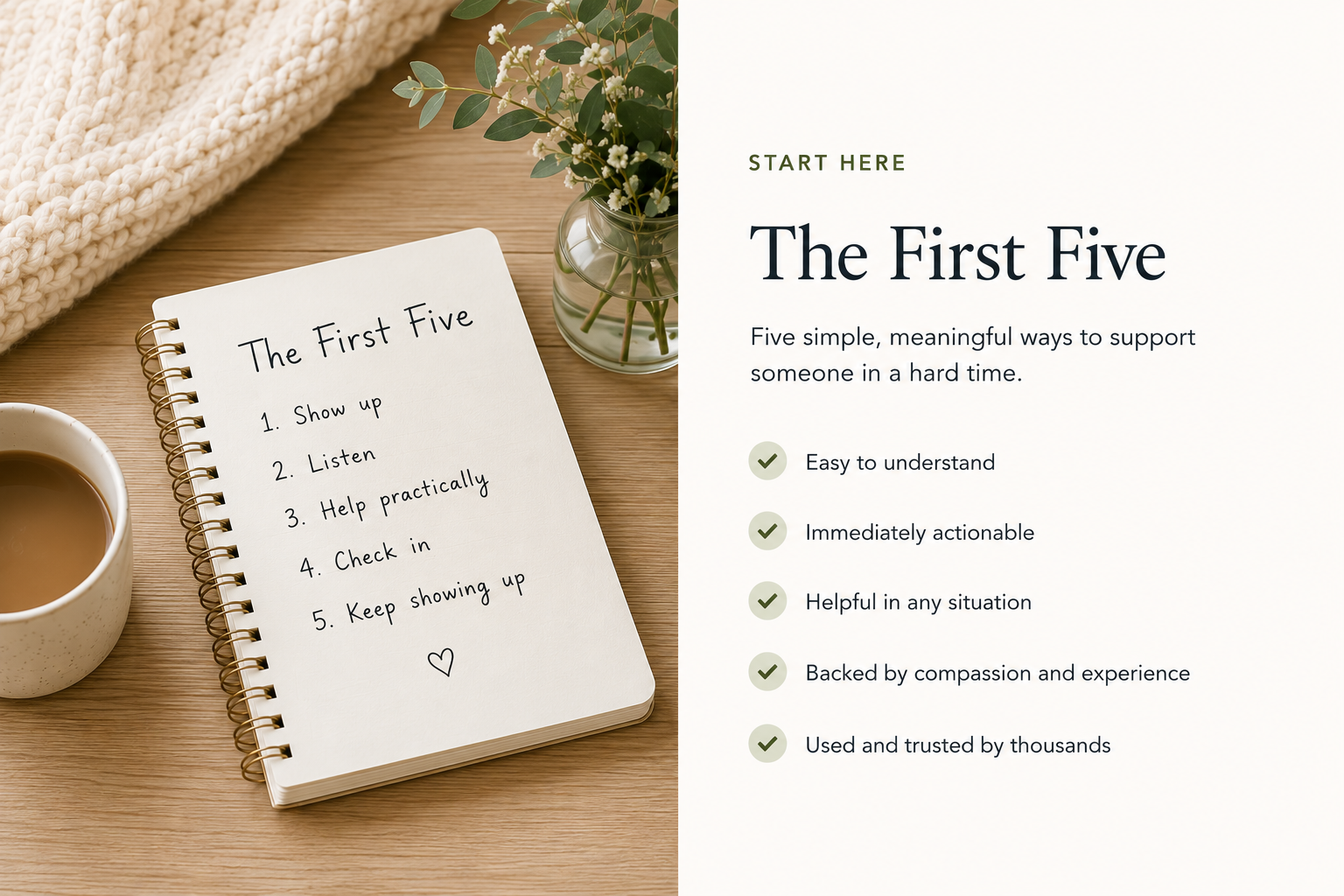 Free resourcesFind caring words and practical help you can use nowBrowse practical help →
 $39 written planGet a plan made for your person and situationExplore Grief GPS →Private 1-on-1 supportTalk it through in a focused support sessionView support sessions →
 Family, school & team planningCoordinate care with a clear, personalized planExplore personalized care plans →
 Personalized recommendationsChoose meaningful gifts and practical care that truly fitExplore gift & care guidance →